
Flooring Built for a Dry Climate and a Moving Subfloor
We install hardwood, engineered wood, luxury vinyl plank, laminate and tile for homeowners in Highlands Ranch, Castle Pines, Parker, Lone Tree, Greenwood Village, Centennial and across the south Denver metro. Most flooring problems we get called about are not the flooring. They are the subfloor underneath it, the moisture in the slab, or a material that was never right for the room it went into. We look at those first.
Flooring in the Denver metro
Colorado is hard on wood floors in a way that surprises people who move here. Wood takes on and gives up moisture with the air around it, and the air here is dry — especially through winter, when the heating runs and indoor humidity drops further. Boards shrink, and thin gaps open along the seams. Come summer they take moisture back on and close up again. That seasonal movement is normal and it is not a defect. What separates a floor that handles it from one that fails is whether the material was allowed to acclimate to your house before installation, whether the right expansion gap was left at the walls, and whether the species and construction suited the conditions in the first place. Rushing a floor in the week it was delivered is one of the most common reasons a hardwood installation goes wrong here.
The subfloor decides the outcome more than the flooring does. It needs to be flat within the tolerance the manufacturer specifies, structurally sound, dry, and clean. If it is not flat, you get hollow spots underfoot, clicking, and planks that separate at the joints over time. Most manufacturer warranties are written to exclude failures caused by improper subfloor preparation, which means a floor installed over a subfloor nobody assessed is a floor with no real warranty behind it. This is also the single most common source of surprise cost on a flooring job. We assess it before quoting so that the number we give you includes whatever the subfloor actually needs, rather than appearing as a change order once the old floor comes up.
Concrete gives off moisture, and a basement slab sits against ground that holds water. That moisture has to go somewhere, and if flooring is installed over a slab without testing it first, it goes into the flooring — which is how you end up with cupping, adhesive failure and, in the worst cases, mould underneath a floor that looked perfect when it was finished. So we test slabs before installing over them, and we specify the assembly around what the test says: the right moisture barrier or underlayment, and a material that can live with the conditions. Solid hardwood is generally not the right choice below grade. Engineered wood and quality luxury vinyl plank are built to tolerate it, and in a basement they will outlast solid hardwood by a wide margin.
If you already have solid hardwood, replacing it is often the wrong move. Solid wood can be sanded and refinished more than once, depending on how much wear layer is left, and refinishing an existing floor is typically far cheaper than tearing it out and buying a new one. Engineered wood can sometimes be refinished too, depending on the thickness of its top layer. We will tell you which situation you are in. If your floors can be brought back rather than replaced, that is what we will recommend, even though it is the smaller job.
We do not have a product we push. Different rooms want different things: a basement wants something that can handle moisture, a kitchen wants something that survives a dropped pan and a spilled pot, a bedroom can take a softer material, and a house with large dogs wants a wear layer that can cope with them. We will tell you what each option costs, what it does well, where it fails, and what we would put in our own house — including when the cheaper option is genuinely the better one.
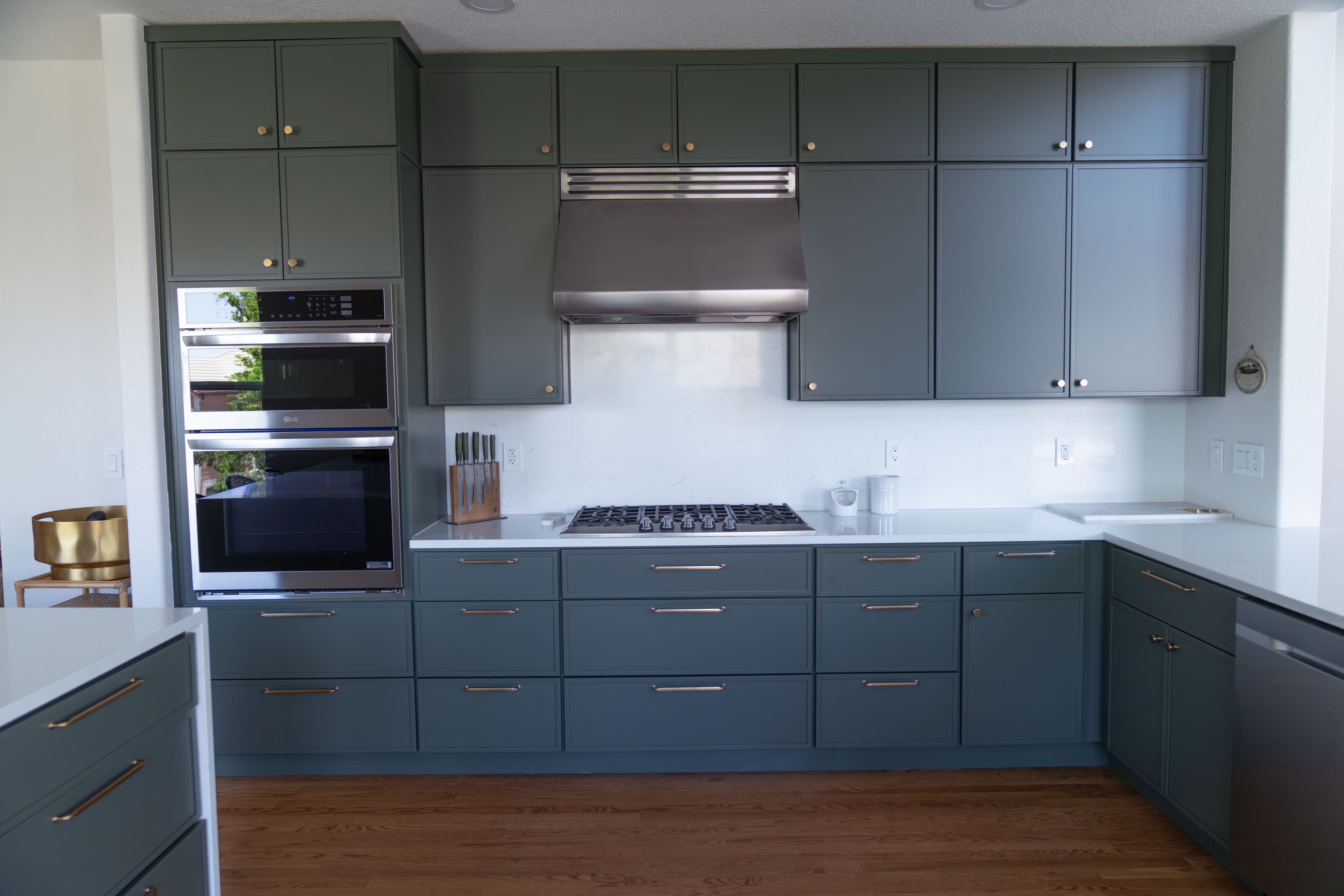
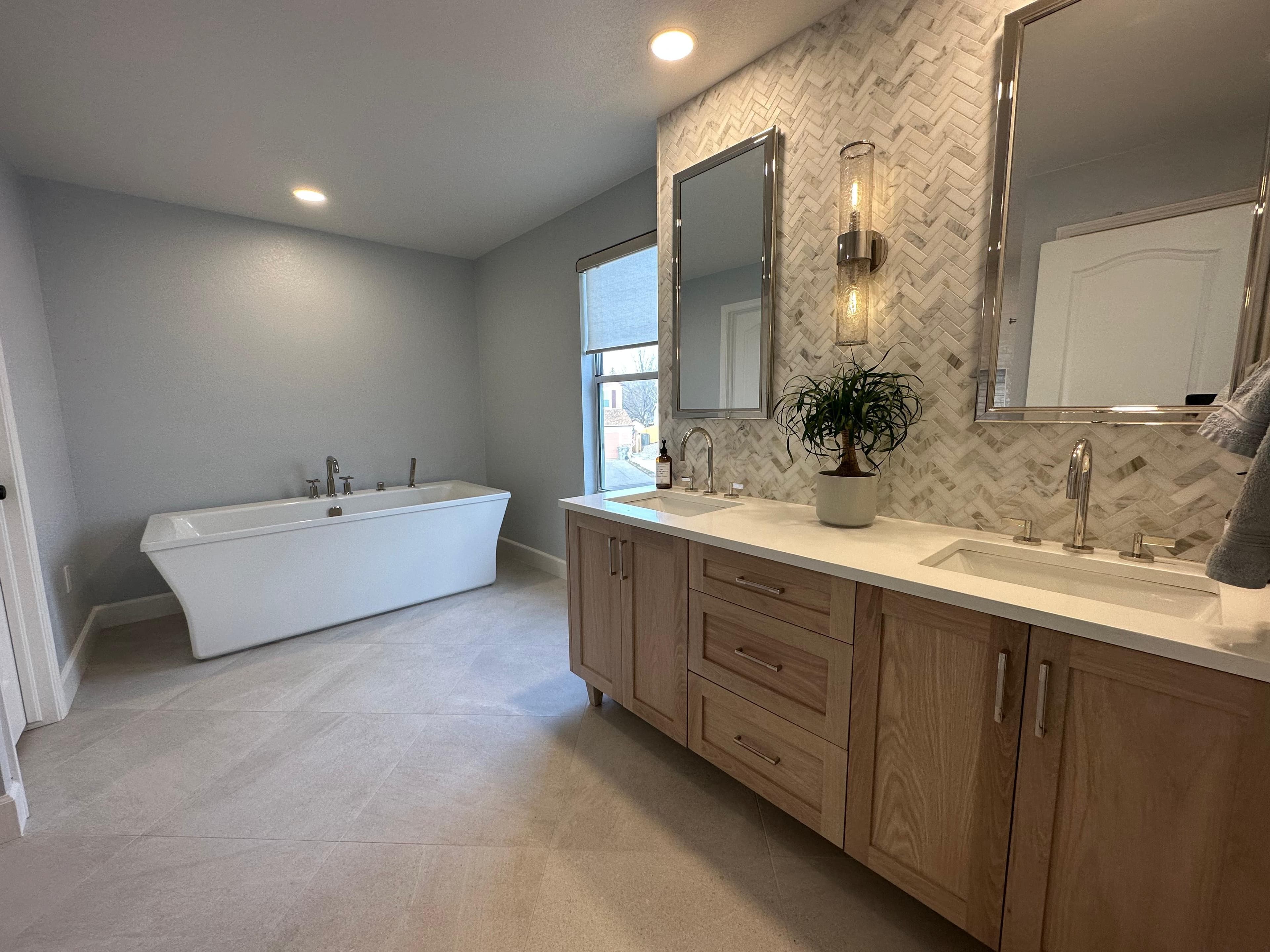
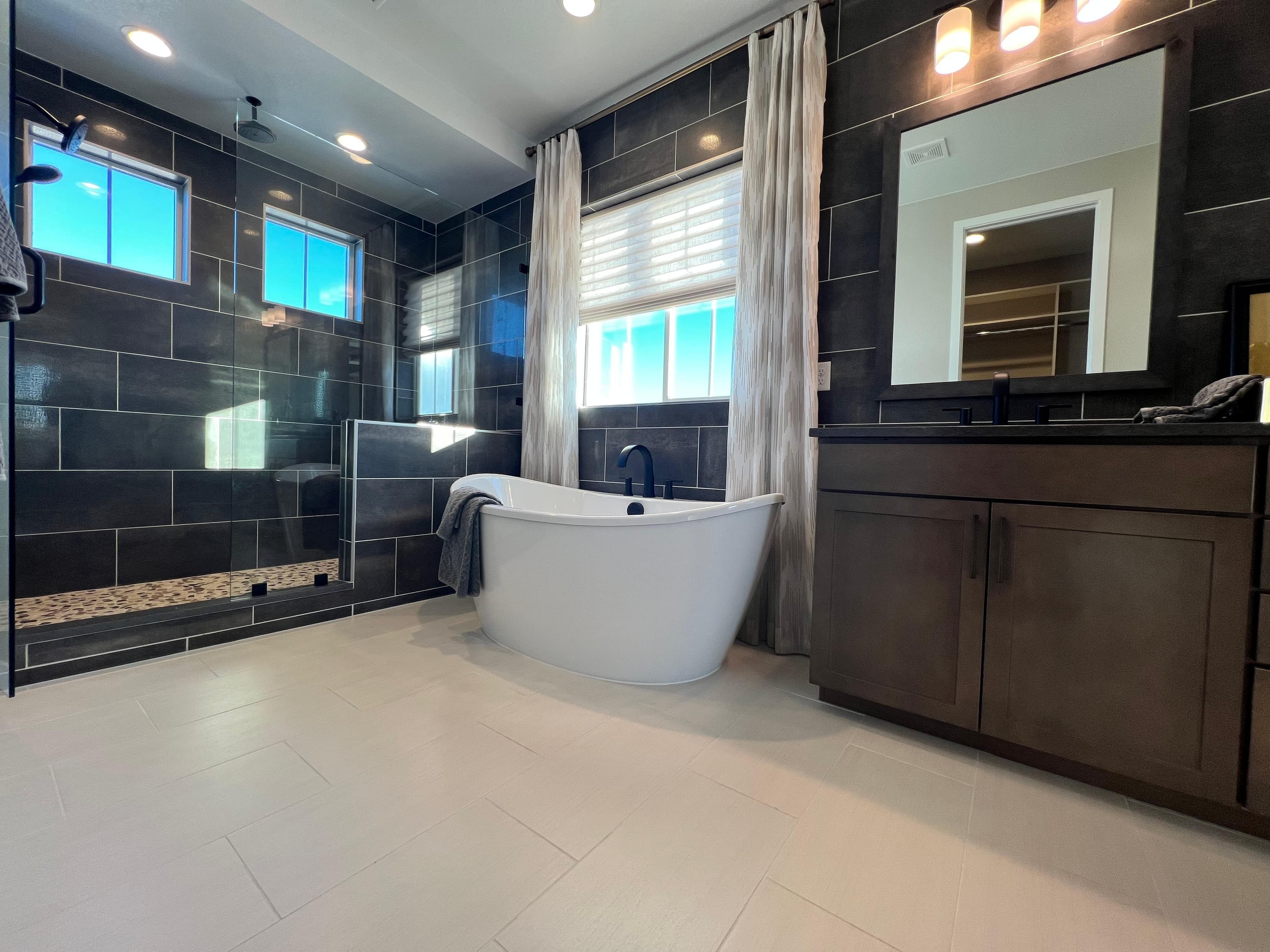
Related projects
Flooring FAQ
Straight answers to what Denver-metro homeowners ask us about this service.
Can I put hardwood in my basement?
Solid hardwood is generally not recommended below grade. A basement slab sits against ground that holds moisture, and solid wood reacts to that by cupping, gapping or failing at the adhesive. Engineered wood and quality luxury vinyl plank are built for those conditions and will hold up far better. Whichever you choose, the slab should be moisture tested first and the right barrier specified around the result.
Why did gaps appear in my wood floor in winter?
Almost certainly the dry air. Wood gains and loses moisture with the air around it, and Colorado winters combine an already dry climate with indoor heating, which pulls indoor humidity down further. Boards shrink and thin gaps open at the seams, then close again as humidity comes back up in summer. Seasonal movement is normal. Gaps that do not close, boards that cup or lift, or movement severe enough to catch a fingernail on are worth having looked at — that usually points to a moisture or installation issue rather than the weather.
Should I refinish my floors or replace them?
If they are solid hardwood, refinishing is often the better answer and usually costs substantially less than replacement. Solid wood can be sanded and refinished more than once depending on how much wear layer remains. Engineered wood sometimes can be too, depending on the thickness of its top layer. Replacement makes more sense when the wear layer is spent, when there is water damage or structural movement underneath, or when you want a different material entirely. We will look at what you have and tell you which one you are actually in.
Why does the subfloor matter so much?
Because it is what your floor is bearing on. If the subfloor is not flat within the manufacturer's tolerance, you get hollow spots, clicking underfoot, and joints that separate over time. If it is damp, you get adhesive failure and cupping. Most flooring warranties specifically exclude failures caused by improper subfloor preparation, so skipping that work does not save money — it just moves the cost, and voids your cover on the way. We assess and price it up front rather than raising it as a change order once the old floor is up.
What areas do you serve?
We install flooring throughout the Denver metro, with most of our work in Highlands Ranch, Castle Pines, Parker, Lone Tree, Greenwood Village, Centennial, Castle Rock and Aurora.
What does BDT do differently?
We look under the floor before we quote it, and we tell you what we find. That means fewer surprises once the old flooring comes up, and it means we will sometimes recommend refinishing what you have instead of selling you a replacement. Most of our work comes by referral, which only happens when people feel they were dealt with straight.
Related services
Basement Finishing
Finished basements across the south Denver metro — permitted, inspected, and built to code. Including an honest answer on whether yours is worth finishing at all.
Explore serviceKitchen Remodeling
Full kitchen renovations — cabinetry, countertops, layout changes, lighting and the trades to tie it together.
Explore servicePainting
Clean, durable interior and exterior painting with the prep that makes it last in Colorado's climate.
Explore serviceGet a free flooring estimate
Tell us about your flooring project and Rod's team will reach out within one business day with next steps and a fixed written estimate.
- Free, no-obligation on-site estimate
- Fixed written price — no surprises
- Licensed, insured & permit-handled
- Response within one business day
Prefer to talk now? (720) 463-8060
Free Quote · No obligation